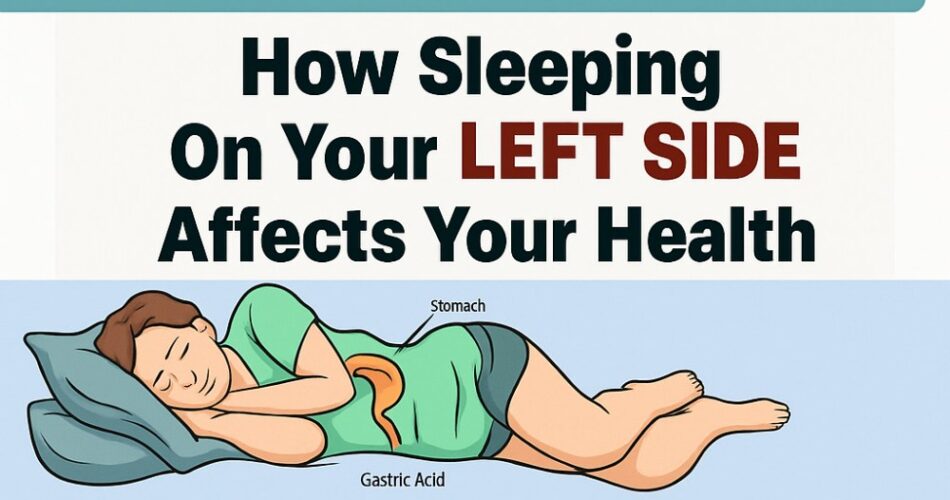
Sleep is the ultimate cornerstone of health, serving as the critical period when your body repairs tissue, consolidates memory, and resets hormonal balance. We meticulously select the right mattress, the perfect pillow, and the ideal room temperature, yet many of us overlook the single most influential factor affecting our nightly recovery: sleep position.
For those who instinctively roll onto their right side for comfort, a startling body of medical and physiological research suggests this seemingly benign habit may be inadvertently causing hidden strain and discomfort. Your body is silently battling against the forces of gravity and internal anatomy every single night.
Are you waking up with persistent heartburn, unexplained morning stiffness, or that frustrating sensation of bloated heaviness? The answer to your discomfort may be as simple as shifting a few degrees to the left.
This comprehensive guide delves into the compelling scientific reasons why sleeping on your right side is less than ideal. We will uncover its surprising links to chronic acid reflux, its potential impact on your heart and vital lymphatic system, and the musculoskeletal pain it generates. More importantly, we will show you simple, actionable alternatives that can transform your rest from restless to truly restorative.
Prepare to understand what your body isn’t telling you, and unlock the secret to anatomically optimal sleep.
🔥 THE DIGESTIVE DILEMMA: THE LINK TO ACID REFLUX AND GERD 🤢
One of the most documented and widely accepted disadvantages of sleeping on the right side involves its detrimental effect on the digestive tract, particularly for individuals prone to acid reflux.
The Anatomical Trap of the Right Side
- Stomach Position: The human stomach, specifically the gastroesophageal junction (the valve connecting the esophagus to the stomach, known as the lower esophageal sphincter or LES), is located slightly to the left of the body’s midline.
- The Problem: When you lie on your right side, gravity pulls the stomach contents (including highly corrosive gastric acids) up towards the esophagus. Furthermore, the positioning of the stomach relative to the LES is less favorable, allowing the LES to relax or open more easily.
- The Result: This encourages the painful backflow of gastric acids into the sensitive lining of the esophagus, resulting in the burning sensation of heartburn or full-blown Gastroesophageal Reflux Disease (GERD). This discomfort can severely disrupt sleep, leading to chronic fatigue.
The Left-Side Solution (The Anti-Reflux Position)
Studies have conclusively demonstrated that sleeping on the left side significantly reduces the incidence and severity of acid reflux.
- The Gravity Advantage: When you lie on the left side, the stomach is naturally positioned below the esophagus. This uses gravity to keep the acid safely contained in the lower part of the stomach, drastically reducing the likelihood of acid regurgitation.
Simple Tip: If you frequently suffer from nighttime acidity, prioritizing the left-side position is one of the simplest, non-pharmaceutical interventions you can make for immediate relief.
❤️ THE CARDIOVASCULAR CHALLENGE: IMPACT ON HEART AND CIRCULATION 🩺
Beyond digestive issues, sleeping on the right side can introduce subtle yet significant challenges to the cardiovascular and lymphatic systems, which are essential for detoxification and fluid management.
Pressure on the Heart
While a healthy heart can easily adapt to various positions, sleeping on the right side may exert more direct pressure on the heart.
- Venous Return: The large vessels that return deoxygenated blood to the heart are slightly compressed or positioned in a way that, for some, particularly those with pre-existing conditions, may feel restrictive.
- The Clinical Perspective: Individuals diagnosed with congestive heart failure, hypertension, or other existing cardiac conditions often report feeling more comfortable and experiencing less symptomatic distress when they avoid the right side. The left side is generally preferred as it is thought to allow the heart to pump more efficiently against gravity.
Disrupted Lymphatic Drainage and Detoxification
The lymphatic system is the body’s crucial waste removal and immune transport network, and its effectiveness is heavily influenced by sleep posture.
- Lymphatic Anatomy: The body’s main lymphatic duct, the thoracic duct, which is responsible for draining most of the lymph fluid from the body, is located on the left side.
- The Optimal Flow: When you sleep on the left side, gravity assists the natural flow of lymph fluid through this duct, promoting more efficient detoxification and waste clearance while you sleep.
- The Right-Side Setback: Sleeping on the right side may slightly inhibit this optimal flow. Poor lymphatic drainage at night can contribute to morning symptoms like increased fluid retention, heaviness in the limbs, or even puffiness and swelling in the face and extremities. This compromises the restorative function of sleep.
🦴 MUSCULOSKELETAL STRESS: WAKING UP STIFF AND ACHY 😩
The final major drawback of consistently choosing the right side is the undue stress it places on your joints, muscles, and nerves, leading to chronic musculoskeletal discomfort.
The Compression and Misalignment Effect
When you sleep on your side, your entire body weight is distributed unevenly across just a few contact points: your shoulder, hip, and ankle.
- Shoulder Pain: Persistent pressure on the right shoulder can compress nerves and restrict blood flow, leading to classic symptoms like shoulder pain, stiffness, or tingling (paresthesia) in the arm and hand. Over time, this constant compression can contribute to chronic inflammation of the rotator cuff or bursitis.
- Hip and Lower Back Discomfort: Sleeping on the right side without proper support causes the upper leg to roll forward, misaligning the spine and placing unnatural torque on the hip and lower back. This posture contributes to hip pain and chronic lumbar discomfort due to uneven weight distribution and muscle strain.
- Nerve Compression: The position can inadvertently compress peripheral nerves in the shoulder and elbow, resulting in the unpleasant sensation of “pins and needles” or temporary numbness upon waking.
🛌 THE BEST POSTURE: FINDING YOUR OPTIMAL RESTING POSITION 🎯
No single position is a universal panacea, but based on anatomical and physiological evidence, some postures are demonstrably superior for recovery and systemic health.
The Preferred Alternative: The Left Side
- Why It’s Recommended: For individuals struggling with reflux, circulation issues, lymphatic congestion, or general heart health concerns, the left side is often recommended by physicians. It provides the most favorable position for digestion and detoxification.
The Secondary Alternative: The Back (Supine)
- Benefits: Sleeping on your back is excellent for spinal alignment and can prevent shoulder and hip compression issues.
- Caveats: This position is not ideal for everyone. It can exacerbate snoring and significantly worsen obstructive sleep apnea. It is also not recommended for the later stages of pregnancy.
Actionable Tips to Alleviate Right-Side Strain
If you simply cannot abandon your side-sleeping preference, you can modify the posture to reduce strain:
- Use an Orthopedic Pillow: Ensure your pillow maintains the neutral alignment of your neck and spine, preventing the head from dipping or rising too high.
- Knee Cushion: Place a firm pillow or cushion between your knees. This simple act keeps your hips stacked and prevents the upper leg from twisting, thus stabilizing the lower spine.
- Use a Body Pillow: A full-length body pillow can help prevent you from fully rolling onto your right side and can be used to embrace, providing crucial support and alignment.
✅ FINAL THOUGHTS: THE POWER OF POSTURAL AWARENESS ✨
Your body is constantly communicating, even when you are asleep. Persistent morning discomfort—be it a burning chest, a stiff shoulder, or unexplained heaviness—may be your body silently alerting you to the disadvantages of sleeping on your right side.
Science provides clear insights into these hidden effects, ranging from digestive compromise to cardiac strain and musculoskeletal pain. Paying mindful attention to your sleep posture is a powerful, zero-cost way to dramatically improve the quality of your rest, support nocturnal circulation, and protect your long-term health.
If you are struggling with chronic nighttime discomfort, experiment with small adjustments: consciously starting your night on your left side, or integrating proper cushion support. Sometimes, the simplest change in position can be the difference between restless, aching nights and truly restorative, healing sleep.
Would you like to learn more about the specific pillow types recommended for side sleepers to optimize spinal alignment?